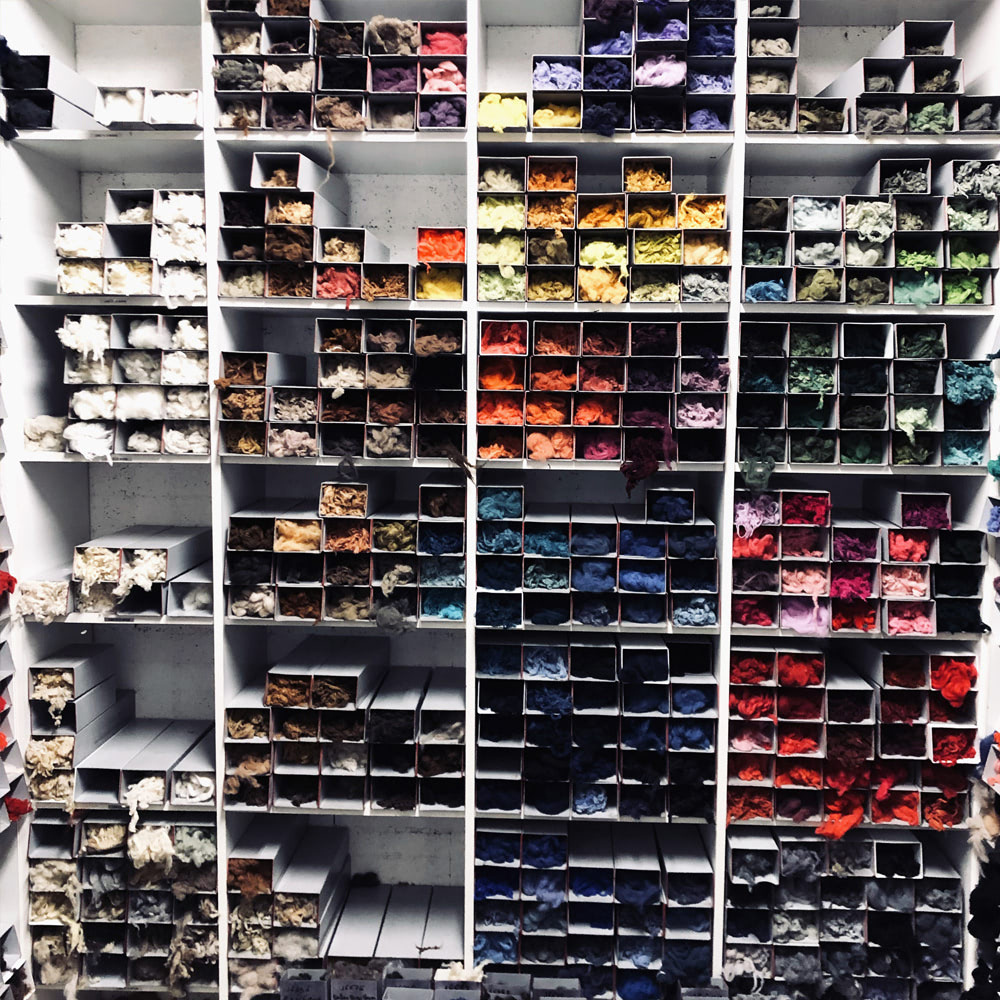
Behind your jumpers are materials, and that’s where it all starts!
Carefully selected in France, Italy and Spain, our materials are always recycled, organic or natural fibres.
Our experience has enabled us to build relationships of trust with our spinners and ensure that they share the same human values and environmental commitments as we do.
OUR RECYCLED YARNS
We preserve our planet’s resources by recycling wool, cotton, acrylic, polyamide and polyester to make new jumpers.
The materials we recycle come from production off-cuts (pre-consumer) or old jumpers (post-consumer).GRS CERTIFICATION
The recycling process is certified and traceable, guaranteed by GRS certification (Global Recycled Standard).
This certification is awarded after an independent audit and ensures recycled content, quality, social and environmental practices and restrictions on chemical composition.


Les Filatures du Parc
Founded: 1975
Origin: France
Last visit: June 2021


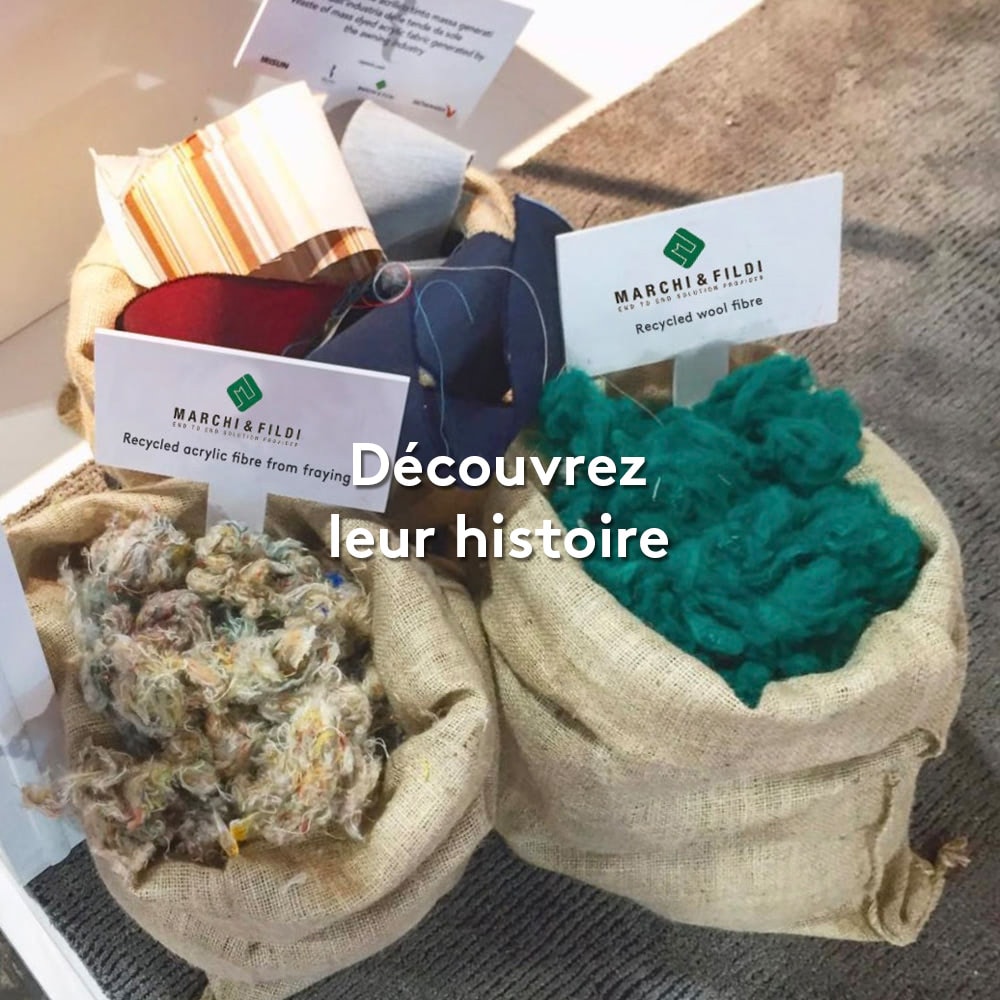
Marchi & Fildi
Founded: 1965
Origin: Italy
Last visit: September 2021

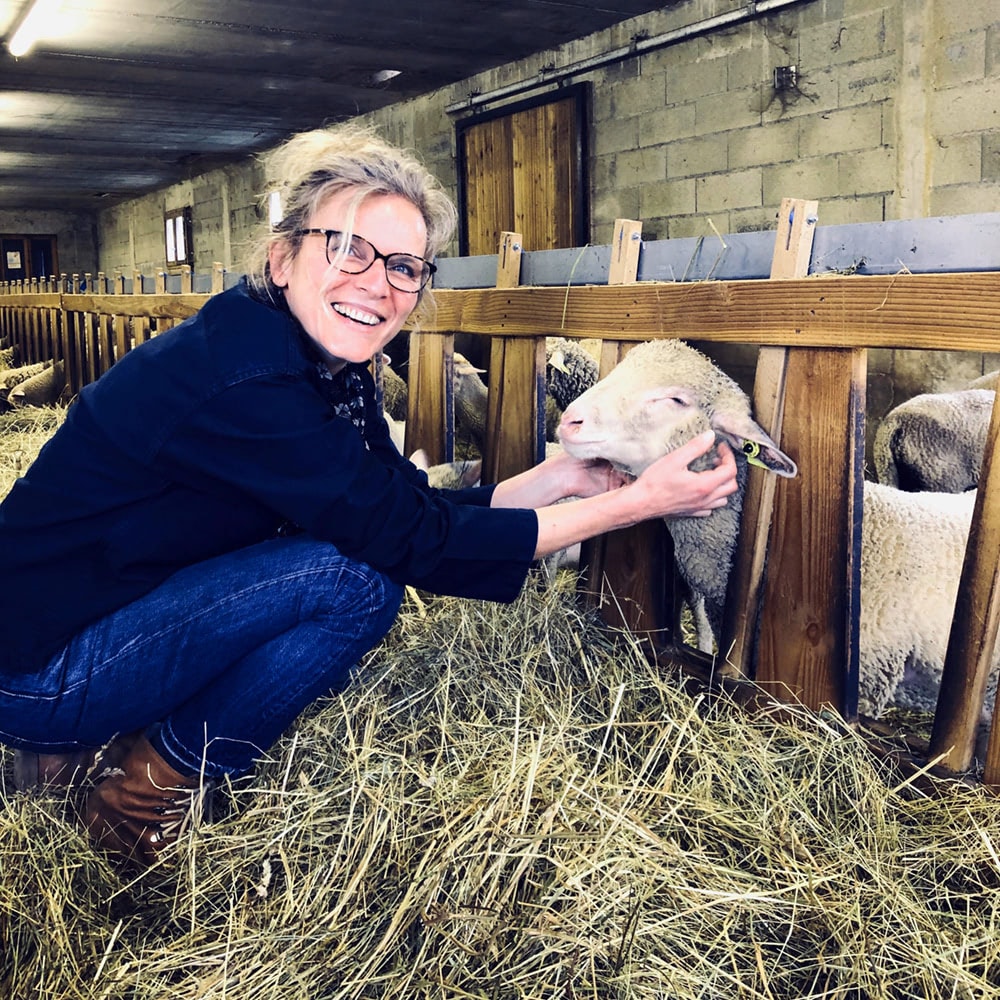
OUR EXCEPTIONAL YARNS
We choose qualities that we dream of working with and that fire our creativity. Our materials are natural, not synthetic, and respectful of the environment. We make sure that the origin of our animal fibres – wool, alpaca and mohair – is guaranteed mulesing-free.
FREE MULESING
The practice of mulesing consists of removing part of the sheep’s perinatal skin to reduce the risk of disease and improve the breeders’ yields.
This practice, which we consider cruel, only concerns wool from New Zealand and Australia.


Le Mohair Des Fermes de France
Founded: 1985
Origin: France
Last visit: June 2019

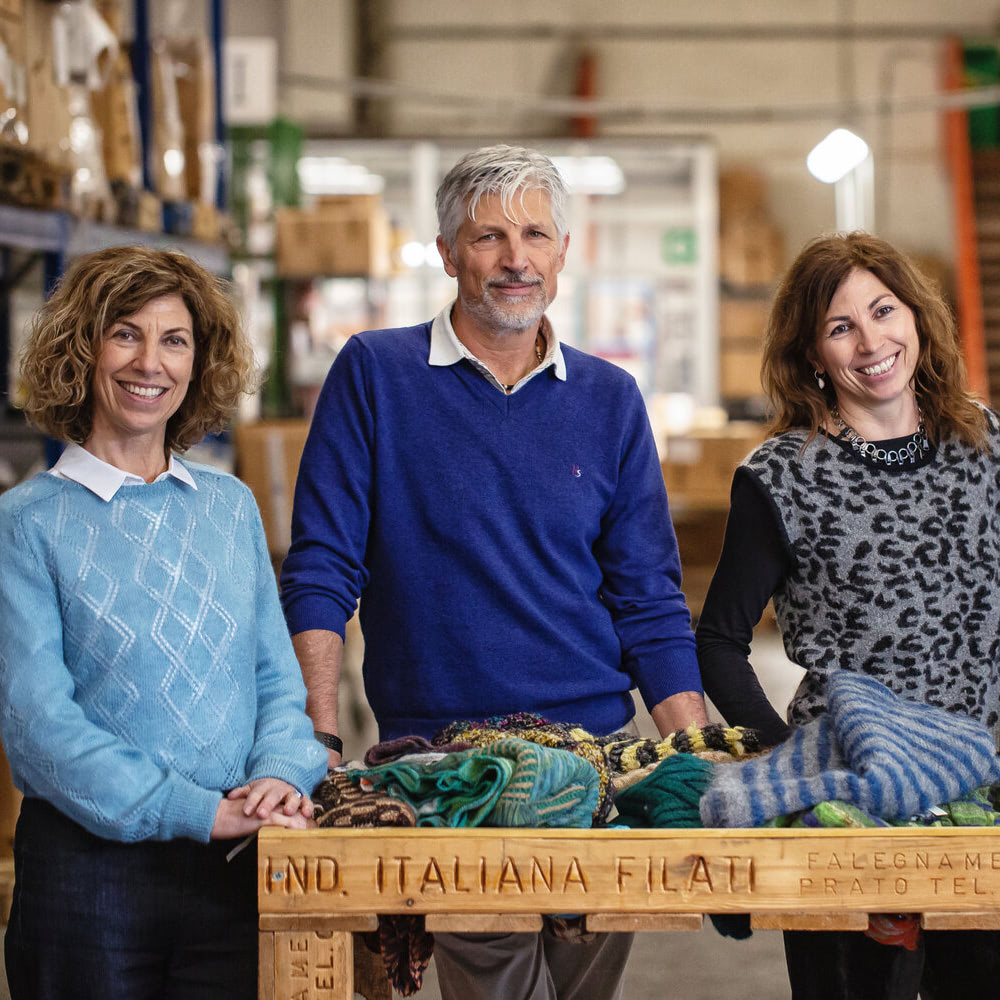
Industria Italiana Filati
Founded: 1967
Origin: Italy
Last visit: June 2020
Guido began producing and exporting qualities for the textile market in 1897. The Lucchesi family set up their own spinning mill in 1967 in Pato, Tuscany.
In addition to its innovative yarns, it works with 4sustainability, which supports companies in their ecological transition; joins the Detox movement launched by Greenpeace in 2016, aimed at eliminating toxic substances from textile production; and also participates in reforestation with the Treedom association.